

Thrush Test Kit: How to Test for Thrush at Home
Author Dr Kate Garside
Thrush Test Kit: How to Test for Thrush at Home, Including Oral Thrush
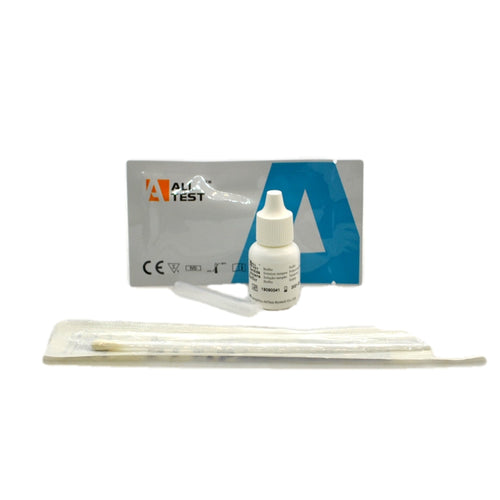
Itching, soreness and a discharge that just is not right are miserable enough without the guessing game that comes with them. Is it thrush again, or something else? Should you head straight to the pharmacy for another cream, or reach for a thrush test kit and check first?
Here is the short answer. A thrush test kit is a simple home swab test that detects Candida albicans, the yeast behind most thrush, and gives you a result in about 15 minutes. It helps you check whether your symptoms really are thrush before you treat them. Like every home test, it is a screening tool, so symptoms that are new, unusual or slow to settle still need a GP, pharmacist or sexual health clinic.
In this guide I will explain how testing for thrush at home works, how to take the swab and read the result, what a home test for oral thrush can and cannot tell you, and when to skip the kit and speak to a professional instead.
What is thrush?
Thrush is a yeast infection caused by candida, a fungus that lives quietly on the skin and in the mouth, gut and vagina of many healthy people. It only causes symptoms when something tips the balance and it overgrows. The NHS describes thrush as common and usually harmless, if uncomfortable, and it is not classed as a sexually transmitted infection (STI).
I often compare candida to dandelions in a lawn. A few are almost always there and do no harm. Thrush is what happens when conditions suit them and they take over a patch. Around three quarters of women will have vaginal thrush at some point in their lives, and men can get it too, usually on the head of the penis.
The things most likely to tip the balance are:
- Antibiotics: they clear out the friendly bacteria that normally keep candida in check.
- Hormonal changes: pregnancy and hormone replacement therapy (HRT) both raise oestrogen, which encourages candida to grow.
- Diabetes: poorly controlled or undiagnosed diabetes leaves more sugar in body fluids for yeast to feed on.
- A weakened immune system: for example because of HIV, chemotherapy or long-term steroid medicines.
- Irritated skin: perfumed soaps, shower gels, douches and tight synthetic underwear can all upset the delicate skin of the vulva.
Why testing for thrush is worth doing before you treat
Every week our team speaks to women who have already tried two or three thrush treatments and still feel no better. Very often, the problem was never thrush in the first place.
The research backs this up. In a well-known study published in 2002, researchers examined women who had just bought an over-the-counter thrush treatment. Only about a third (33.7%) actually had thrush on its own. Almost one in five had bacterial vaginosis, about one in five had a mix of infections and around one in seven had no infection at all. Women who had been diagnosed with thrush before were no better at recognising it than women who had not.
That matters for three reasons:
- The wrong treatment wastes time: antifungal creams do nothing for bacterial vaginosis, a urine infection or an STI.
- Repeated antifungals can backfire: frequent courses can encourage harder-to-treat yeast species to take hold.
- The NHS sets a limit: you should not use antifungal thrush treatment more than twice in 6 months without speaking to a pharmacist or doctor.
A thrush test kit fills the gap between "I think it is thrush" and "I know it is". It is most useful if you have had thrush diagnosed before and want to check that this episode really is the same thing before you buy treatment again.
How does a thrush test kit work?

Our ALLTEST thrush test kit is a rapid antigen test. An antigen is a protein on the surface of a germ that the immune system, and a well-made test, can recognise. You take a swab from inside the vagina, mix it with a buffer solution that releases these proteins, then add a few drops to a small test cassette.
Inside the cassette is a strip carrying antibodies that latch on to Candida albicans antigens. If enough are present, a coloured line appears at the test (T) mark. A second line at the control (C) mark shows the test has worked properly. ALLTEST reports 96.7% accuracy for this test in clinical trials, and the same cassettes are supplied to clinics in our professional pack of 10.
There are two limits worth understanding before you test:
- It looks for Candida albicans only: this species causes the large majority of thrush, but a smaller number of cases, particularly recurrent ones, are caused by other species such as Candida glabrata, which this test is not designed to detect.
- It cannot tell infection from harmless yeast: many women carry candida with no symptoms at all. A positive result only means something when you also have symptoms, which is why I always say test your symptoms, never test "just to see".
How to test for thrush at home, step by step
The whole process takes about 20 minutes, and most of that is waiting. Always follow the leaflet in your pack, but these are the steps that matter most for a clear result.
- Check the timing. Test while you have symptoms, before you use any thrush cream or pessary, and ideally not during your period.
- Get ready. Let the kit reach room temperature, then wash and dry your hands.
- Take the swab. Gently insert the soft tip a few centimetres into the vagina, as shown in the leaflet, rotate it for around 10 seconds and remove it carefully. It should not hurt.
- Mix the sample. Place the swab in the tube with the buffer, swirl it firmly against the sides about 10 times, leave it to soak for a minute, then squeeze the tube as you lift the swab out.
- Add the drops. Fit the dropper tip and add the number of drops stated in the leaflet to the sample well on the cassette.
- Wait and read. Read the result at 15 minutes and never after 20 minutes, as lines that appear late are not reliable.
Doctor's tip: Take the swab from inside the vagina, not just the outer skin, as that is where the yeast is most concentrated. Skip intimate washes, lubricants and douches beforehand. If you have already started a cream or pessary, finish the course and only test again if your symptoms come back.
 Reading your result
| Result | What you see | What it means | What to do next |
|---|---|---|---|
| Positive | A line at C and a line at T, however faint the T line is | Candida albicans has been detected | If your symptoms fit, a pharmacist can recommend treatment |
| Negative | One line at C only | Candida albicans has not been detected | Your symptoms may have another cause, so see a pharmacist, GP or sexual health clinic before treating |
| Invalid | No line at C | The test has not worked | Repeat with a new kit, checking the number of drops and the timing |
Is it thrush or something else?
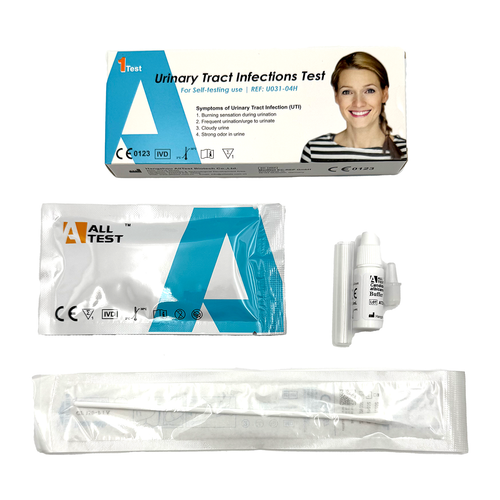
Vaginal itching, stinging and discharge have several possible causes, and they often overlap. This is the table I wish every woman had on her bathroom shelf.
| Condition | Typical discharge | Other clues | Where to start |
|---|---|---|---|
| Thrush | Thick and white, often like cottage cheese, usually with little smell | Itching, soreness, stinging when you pee or during sex | A thrush test kit, then a pharmacist |
| Bacterial vaginosis (BV) | Thin, white or grey, with a fishy smell that is often stronger after sex | Usually little itching or soreness | A pharmacist, GP or sexual health clinic |
| Cystitis or a urine infection (UTI) | Usually unchanged | Burning when you pee, needing to go often and urgently, cloudy or strong-smelling urine | Our cystitis test kit, then a pharmacist or GP |
| STIs such as chlamydia, gonorrhoea or trichomoniasis | May be unchanged, or yellow, green or frothy | Bleeding after sex or between periods, or pelvic pain, though chlamydia often causes no symptoms at all | A sexual health clinic or a home STI test |
Thrush and cystitis can both make it sting when you pee, which is why our women's sexual health test bundle pairs a thrush test with a UTI test, so you can check both at once.

Important: a thrush test cannot rule out an STI
A negative thrush test does not mean nothing is wrong, and a positive one does not rule out a second infection alongside it. Chlamydia, gonorrhoea and trichomoniasis can all change your discharge. Our sister site Valuemed has a clear guide to using STI test kits at home.
If there is any chance you could have an STI, get tested at a sexual health clinic, even if your thrush test is positive. NHS sexual health clinics are free and confidential.
Oral thrush test at home: what a swab can and cannot tell you
According to the NHS, oral thrush turns the inside of the mouth red with white patches that wipe off to leave red spots, which can bleed. Adults may also notice cracks at the corners of the mouth, an unpleasant taste or loss of taste, and soreness that makes eating and drinking difficult. It is most common in babies, people who wear dentures, people using steroid asthma inhalers and anyone who has had a long course of antibiotics.
So is there a reliable oral thrush test at home? I want to be straight with you here. Our thrush test kit is designed for vaginal swabs, and that is where its accuracy figures come from. It can also be used on a swab from the mouth or a skin fold, but most people carry a little candida in their mouths without any problem. A positive result from the mouth is only meaningful alongside the typical red, sore areas and white patches.
In practice, the most useful home test for oral thrush is a good look in a mirror in bright light:
- Thrush patches wipe off: they lift away, leaving red, raw-looking skin underneath.
- A coated tongue brushes off evenly: a furry white tongue that clears with brushing and does not hurt is usually not thrush.
- Patches that stay put need checking: white or red patches that will not wipe off, or a mouth ulcer lasting more than 3 weeks, should be seen by a dentist or GP.
A pharmacist can recommend an antifungal mouth gel for adults, children and babies over 4 months. Please do not use a home swab kit on a baby. If your baby is under 4 months and has signs of oral thrush, the NHS advises seeing a GP. If you are breastfeeding, mention any nipple pain too, as thrush can pass between baby and breast.
Red flag: Pain or difficulty swallowing with oral thrush can mean the infection has spread into the food pipe (oesophagus). See a GP promptly, and the same day if you have a weakened immune system, diabetes or are having chemotherapy.
When a thrush kit is not the right first step
A home test suits adults who have had thrush before and recognise the symptoms. In the situations below, I would rather you spoke to a professional first and used a test, if at all, as extra information to take along.
- Your first ever episode: the NHS advises seeing a GP the first time you have thrush symptoms, so other causes can be ruled out.
- Pregnancy or breastfeeding: thrush is more common in pregnancy, but some treatments, including fluconazole tablets, are not suitable. Speak to your midwife, GP or pharmacist before treating. Our first trimester guide covers other common early pregnancy changes.
- Under 16 or over 60: thrush is less common at these ages, so symptoms need a proper assessment.
- Men: our kit is designed for vaginal swabs. Men with redness, irritation or discharge under the foreskin should start with a pharmacist, GP or sexual health clinic.
- A weakened immune system: including diabetes, HIV or chemotherapy, where thrush can be more stubborn and spread more easily.
Recurrent thrush: when to look for a reason

The NHS describes thrush as recurrent when it comes back more than 4 times in 12 months. It affects an estimated 5 to 10% of women of reproductive age, and I know from many years of talking to women how much it can wear you down. Recurrent thrush deserves a proper look for a cause, not just another cream.
The usual suspects are:
- Undiagnosed or poorly controlled diabetes: one of the classic reasons thrush keeps returning, in women and men alike.
- Hormonal patterns: some women notice thrush at the same point in their cycle, or after starting HRT or a new contraceptive.
- Skin conditions: vulval eczema and other skin problems can mimic thrush or make it more likely.
- A different yeast species: non-albicans species are more common in recurrent cases and may need a different treatment, which a laboratory swab can identify.
If you are also feeling thirsty, passing more urine than usual or unusually tired, our HbA1c diabetes and prediabetes test shows your average blood sugar over the past 2 to 3 months from a finger-prick sample. A raised result should always be confirmed with a blood test through your GP.
Doctor's tip: Keep a simple thrush diary for three months, noting the date, your symptoms, your test result, where you were in your cycle and any likely trigger, such as antibiotics, sex or a new product. It turns a vague "it keeps coming back" into a pattern your GP can act on.
Thrush testing options in the UK compared
A home kit is one of several routes to an answer. Here is how they compare.
| Option | Best for | Worth knowing |
|---|---|---|
| Home thrush test kit | Checking a recurrence privately before you buy treatment | Detects Candida albicans only, and is a screening test rather than a diagnosis |
| Pharmacy | Adults aged 16 to 60 with typical thrush that has been diagnosed before | No swab is taken. In Wales, vaginal thrush is covered by the free NHS Common Ailments Scheme |
| GP | First episodes, recurrent thrush, pregnancy, and anyone under 16 or over 60 | A laboratory culture can identify the exact yeast species |
| Sexual health clinic | Symptoms that could be an STI or a mix of infections, with STI testing in the same visit | Free and confidential on the NHS |
Common thrush myths
| The myth | The facts |
|---|---|
| "Thrush is a sexually transmitted infection." | Thrush is not classed as an STI. Sex can trigger it and occasionally pass it on, but most cases have nothing to do with a partner. |
| "A positive swab always needs treatment." | Many women carry candida harmlessly. Treatment is for symptoms, not for a swab result on its own. |
| "Thrush cream is fine to use with condoms." | Antifungal creams can damage condoms and diaphragms, so your contraception may not work during treatment. |
| "Intimate washes and douching keep thrush away." | They upset the natural balance of the vagina and make thrush more likely. Plain water and an emollient are all the vulva needs. |
When to see your GP
Book a GP appointment or call 111 if:
- you have thrush symptoms for the first time
- you are under 16 or over 60
- thrush keeps coming back (more than 4 times in 12 months)
- treatment has not cleared your symptoms within 7 to 14 days
- you are pregnant or breastfeeding
- you have diabetes, HIV, are having chemotherapy or have another reason for a weakened immune system
- you have oral thrush that has not improved after a week of mouth gel
- your baby is under 4 months old and has signs of oral thrush, or a baby with oral thrush is not feeding well
- you have pain low in your tummy with a high temperature, which can be a sign of a pelvic infection (call 111 the same day)
Call 999 or go to A&E if:
- someone is struggling to breathe, or their lips, tongue or throat are suddenly swelling, for example after starting a new medicine
- someone is very unwell with possible signs of sepsis, such as confusion, slurred speech, mottled or bluish skin, or not passing urine for a day
- you are pregnant and have severe tummy pain or heavy bleeding
Frequently asked questions
How accurate is a thrush home test kit?
Very accurate when used correctly. ALLTEST reports 96.7% accuracy for its Candida albicans test in clinical trials, provided the swab is taken from inside the vagina, before treatment, and read at 15 minutes. As a screening test it detects Candida albicans only, so symptoms that do not match your result, or do not settle, should be checked by a GP or sexual health clinic.
Is there a home test for oral thrush?
Not one I would rely on alone. Home thrush kits are designed for vaginal swabs, and because most mouths carry some candida, a positive result from the mouth only means something alongside red, sore areas and white patches that wipe off. A look in the mirror and a chat with your pharmacist is the best first step.
Can men use a thrush kit?
Our thrush kit is designed for vaginal swabs, so for men I would start with a pharmacist instead. Thrush on the penis usually causes redness, irritation and a white discharge under the foreskin. If it keeps coming back, see a GP, as recurrent thrush in men can be an early sign of diabetes.
Do I need to treat my partner for thrush?
Usually not. The NHS advises that partners only need treatment if they have symptoms themselves. Thrush is not classed as an STI, although sex can sometimes trigger it. If sex is uncomfortable, wait until your symptoms have cleared, and remember that antifungal creams can weaken condoms.
Testing for thrush with Access Diagnostics
Access Diagnostics has supplied trusted diagnostic tests to UK households, clinics and the NHS since 2001, and we are still founded and run by doctors. Every thrush test we sell is CE marked and made to professional standards by ALLTEST. Orders placed before 3pm on a weekday are dispatched the same day in plain, discreet packaging, and our price match guarantee means you will not overpay.
If you are not sure which test suits your symptoms, our UK team is on hand by live chat, email and phone on weekdays. Get in touch and we will point you in the right direction.
A thrush test kit will not replace your pharmacist or GP, and it is not meant to. What it can do is stop you treating the wrong thing, which, in my experience, is half the battle with thrush.
Medical disclaimer
The information in this article is for general educational purposes only and does not replace professional medical advice, diagnosis or treatment. Thrush symptoms overlap with bacterial vaginosis, urine infections, sexually transmitted infections and skin conditions, so do not rely on symptoms or a home test alone if anything about your situation is new or unusual.
Home test kits are screening tools. They do not diagnose any condition on their own. Home thrush tests detect Candida albicans only, and a result should always be read alongside your symptoms. A GP or sexual health clinic can confirm the cause with an examination and a laboratory swab.
Speak to a GP, midwife, pharmacist or sexual health clinic if you are pregnant, under 16 or over 60, have symptoms for the first time or have thrush that keeps coming back. Call NHS 111 for urgent advice, or 999 in an emergency. Access Diagnostics provides home test kits to support awareness of your health. They are not a substitute for professional medical advice or laboratory diagnosis.