

Where To Buy A Blood Pressure Cuff & Monitor
Author Dr Kate Garside
Where To Buy A Blood Pressure Cuff & Monitor In The UK
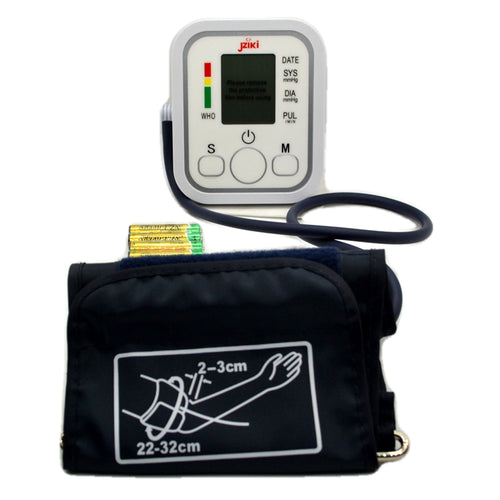
If your GP or practice nurse has asked you to keep an eye on your blood pressure at home, the next question is usually a practical one. Where do you actually buy a blood pressure cuff and monitor, and how do you know you're getting a good one?
Patients ask me this all the time. The good news is that home blood pressure monitors are now affordable, easy to find and simple to use. The less good news is that some devices and cuffs give unreliable readings.
In this guide I'll cover where to buy a monitor in the UK, what to check before you pay, and how to take a reading you can trust.
Important: Know When Not To Wait
If your reading is 180/120 mmHg or higher and you also have any of the following, call 999 straight away rather than re-checking your blood pressure:
- chest pain
- a severe headache
- breathlessness
- confusion
- blurred vision
- weakness in your face, arm or leg
Why it's worth checking your blood pressure at home
High blood pressure, or hypertension, is often called a silent condition because it rarely causes symptoms. Around a third of adults in the UK live with it, and the British Heart Foundation estimates that around 5.4 million UK adults have high blood pressure without knowing it. Untreated, it quietly raises your risk of heart attack, stroke, kidney disease and dementia.
Clinic readings don't always tell the whole story. Many people feel tense in a surgery, and their blood pressure rises temporarily. This is known as the white coat effect. Home readings, taken when you're relaxed, give your GP a truer picture of your everyday blood pressure. In England, some surgeries run a scheme called Blood Pressure @home to support this, so it's worth asking at your practice.
Over my years, I've found the biggest benefit is that people feel more in control. Once you can see your own numbers, the effect of cutting back on salt, walking more or starting a new medicine becomes real.
If you're weighing up which home checks are worthwhile, our guide to home health screening tests that actually work is a good place to start.
Where can you buy a blood pressure monitor in the UK?
You have more choice than ever. Each option has its own strengths.
Your local pharmacy
Pharmacies are a sensible first stop if you'd like to see a device in person and ask questions. Many also offer free NHS blood pressure checks for adults aged 40 and over in England, which is a useful way to compare your home readings with a professional one.
Supermarkets and high street retailers
Larger supermarkets often sell basic monitors. They're convenient, but there's rarely anyone to advise you on cuff size, which is where many home readings go wrong.
The British Heart Foundation online shop
The BHF sells a selection of monitors that have been clinically validated for home use. The choice is limited to a handful of brands, but it's a trustworthy option.
Specialist online medical suppliers
Specialist suppliers usually offer the widest choice. You'll find automatic home monitors, manual sphygmomanometers and replacement cuffs in every size, often at lower prices. Make sure the seller is a genuine UK business with proper customer support.
Your GP surgery
If your doctor wants you to monitor your blood pressure for a short time to confirm a diagnosis, they may be able to lend you a monitor. Availability varies from practice to practice.
| Where to buy | Good for | Worth knowing |
| Local pharmacy | Seeing a device first and asking a pharmacist | Often pricier, and ranges can be small |
| Supermarkets | Convenience | Little advice available, so check the cuff size range carefully |
| BHF online shop | Clinically validated devices | Choice limited to a few brands |
| Specialist online suppliers | Wide choice, spare cuffs in all sizes, trade and NHS pricing | Check the seller is UK based with good support |
| GP surgery loan | Short-term monitoring to confirm a diagnosis | Not always available, and the device must be returned |
Buying from our doctor-led team
Here at Access Diagnostics we specialise in home test kits. For blood pressure equipment, we use our sister store Valuemed, run by the same doctor-led team at Access Diagnostic Tests UK Ltd. That means the same:
- same-day dispatch on weekdays for orders placed before 3pm
- price match guarantee
- friendly UK support team, happy to help you choose
Here's a quick guide to which device suits which person:
| Product | Best for |
| Fully Automatic Blood Pressure Monitor Kit (JZIKI ZK-B869YA) | Everyday home monitoring with a simple one-button reading |
| HK-801 Automatic Blood Pressure Monitor | A straightforward, budget-friendly home monitor |
| Sphygmomanometer and Stethoscope Set | Students and healthcare professionals trained in manual readings |
| Sphygmomanometer with Child, Adult and Large Adult Cuff | Clinics, carers and anyone measuring different arm sizes |
| Palm Sphygmomanometer | Quick one-handed manual readings on the go |
| Replacement BP Cuffs | Replacing a worn cuff or getting a better fit |
Automatic monitor or manual sphygmomanometer?
For almost everyone checking their blood pressure at home, I recommend an automatic (digital) monitor. You wrap the cuff around your upper arm and press a button. The device inflates and deflates the cuff for you and shows your systolic and diastolic pressure and your pulse on a screen. No training is needed.
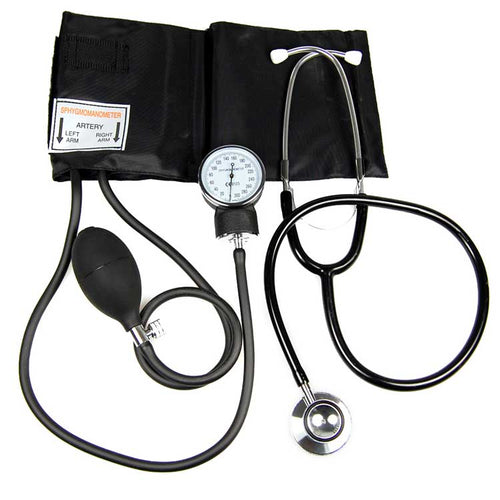
A manual sphygmomanometer, often shortened to "sphyg", is the classic dial gauge and hand bulb. You also need a stethoscope, and you have to listen for the sounds of blood flow in the artery as the cuff deflates. It's an accurate method in trained hands, which is why doctors, nurses, paramedics and medical students still use it. For most people at home, it's harder to get right.
Manual devices also need their calibration checked from time to time. Browse the full range of sphygmomanometers and BP cuffs here.
Upper arm or wrist monitor?
Choose an upper arm monitor wherever possible. Doctors prefer them because they are easier to use correctly and tend to give more consistent readings.
Wrist monitors are very sensitive to position. If your wrist isn't exactly level with your heart, the reading can be noticeably off. A wrist device can be useful if your upper arm is too large for any available cuff, or if an arm condition makes a cuff painful. Otherwise, stick with the upper arm.
Getting the cuff size right matters more than you think
If I could give one piece of advice to anyone buying a monitor, it would be this: check the cuff fits. A wrong-sized cuff is one of the most common reasons for misleading home readings.
- A cuff that's too small tends to give a falsely high reading.
- A cuff that's too large can give a falsely low reading.
How to measure your arm
- Find the point halfway between the tip of your shoulder and your elbow.
- Wrap a soft tape measure around your bare arm at that point, snug but not tight.
- Compare the measurement with the size range printed on the cuff.
| Cuff size | Typical arm circumference |
| Child / paediatric | Smaller arms (check the label for the exact range) |
| Standard adult | Roughly 22 to 32 cm |
| Large adult | Roughly 32 to 42 cm |
| Extra large / thigh | Arms larger than a large adult cuff allows |
Ranges vary between manufacturers, so always go by the label on the cuff itself.
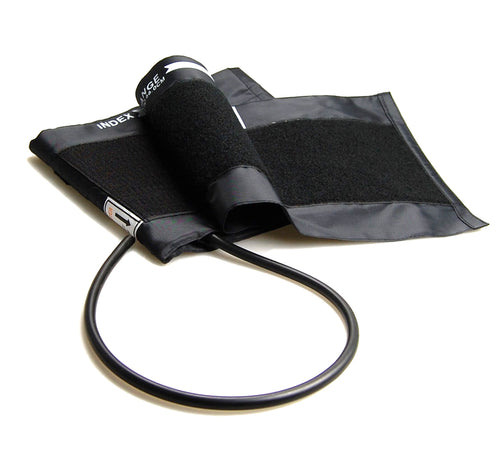
If you already own a monitor but the cuff doesn't fit, you may not need a new device. Replacement cuffs come in two main styles, single tube BP cuffs and two tube BP cuffs. The connection needs to match your device, so check how many tubes your current cuff has before ordering. If you're unsure, get in touch with our team and we'll help you choose.
Your checklist before you buy
- Clinical validation: The British and Irish Hypertension Society (BIHS) keeps a list of monitors that have passed independent accuracy testing. If you're managing a diagnosed condition, check any device against it.
- Upper arm cuff: This is the preferred choice for accuracy.
- The right cuff size: Measure your arm first.
- A clear display: Large digits make a real difference, especially for older users.
- Memory function: This is handy for tracking trends, although a notebook works just as well.
- Irregular heartbeat indicator: Some monitors flag an irregular rhythm, which is worth mentioning to your GP if it appears.
- Power: Check whether it runs on batteries, a mains adaptor or both.
- Servicing: The British Heart Foundation advises having your monitor serviced and calibrated at least every two years.
- UK support: Buy from a seller who will answer the phone if something goes wrong.
How to take an accurate reading at home
Even the best monitor will give poor results if the reading isn't taken properly. Follow these steps each time:
- Avoid caffeine, smoking and exercise for 30 minutes beforehand.
- Empty your bladder, as a full bladder can nudge your reading up.
- Sit quietly in a chair with your back supported for five minutes before you start.
- Keep both feet flat on the floor and don't cross your legs.
- Rest your arm on a table so the cuff sits at the same level as your heart.
- Put the cuff on bare skin, not over a rolled-up sleeve.
- Stay still and don't talk while the monitor is working.
- Take two readings, one to two minutes apart, and write both down.
Doctor's Tip: If your GP has asked you to measure your blood pressure for a week, here is the method clinicians generally use:
- Take two readings each morning and evening for four to seven days.
- Ignore the first day's readings, because nerves and unfamiliarity often push them up.
- Work out the average of the rest.
- Take the full log to your appointment.
What do your numbers mean?
Blood pressure is written as two numbers, measured in millimetres of mercury (mmHg):
- Systolic (the top number) is the pressure when your heart beats.
- Diastolic (the bottom number) is the pressure when your heart rests between beats.
Home readings are usually a little lower than clinic readings, so the thresholds for high blood pressure are slightly lower at home.
| Category | Home reading | Clinic reading |
| Low | 90/60 or lower | 90/60 or lower |
| Ideal | Roughly 90/60 to 120/80 | Roughly 90/60 to 120/80 |
| Stage 1 high | 135/85 to 150/95 | 140/90 to 160/100 |
| Stage 2 high | Above 150/95 | 160/100 to 180/120 |
| Severe | Systolic over 180 or diastolic over 120: seek same-day advice | Systolic over 180 or diastolic over 120: urgent assessment |
Targets can be different for people over 80 and for those with conditions such as diabetes or kidney disease, so always follow the advice of your own GP. One high reading on its own isn't a diagnosis. The pattern over several days is what matters.
Blood pressure, fertility and pregnancy
Much of my work has been in reproductive health. Blood pressure comes up more often in fertility and pregnancy care than many people expect.
If you're trying to conceive
It's worth knowing your blood pressure before you start trying for a baby.
- Medicines: Some commonly prescribed blood pressure medicines aren't recommended in pregnancy. If you take one, speak to your GP before trying to conceive. Please don't stop any medicine on your own.
- PCOS: Women with polycystic ovary syndrome have a higher risk of raised blood pressure, so regular checks are sensible.
- Timing: If you're tracking your cycle, our ovulation test strips can help you pinpoint your most fertile days.
For men
High blood pressure damages blood vessels throughout the body, including those needed for healthy erections. Some blood pressure medicines can also affect sexual function. If you notice changes, talk to your GP, as there are usually alternatives.
If you and your partner are having difficulty conceiving, a home male fertility sperm count test is a simple first step.
During pregnancy
Your midwife will check your blood pressure at every antenatal appointment. One of the main reasons is to spot pre-eclampsia, a serious condition that usually develops after 20 weeks.
Contact your midwife or maternity unit urgently if you notice any of the following:
- a severe headache
- problems with your vision
- pain just below your ribs
- sudden swelling of your face, hands or feet
If you've been asked to monitor your blood pressure at home during pregnancy, ask your midwife which device to use. Some monitors have been specifically validated for use in pregnancy.
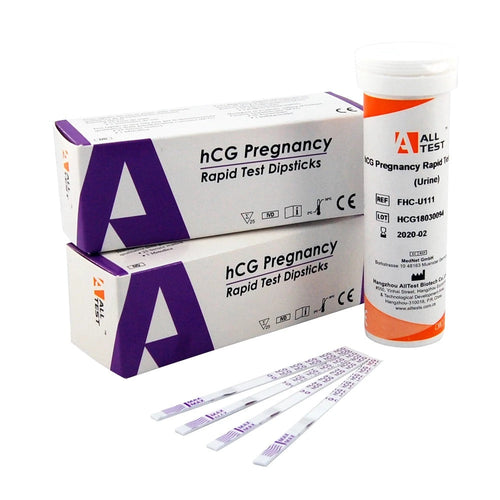
Think you might be pregnant? Our ultra-sensitive 10mIU pregnancy test strips can detect pregnancy early. Our first trimester guide explains what to expect next.
Blood pressure is only one piece of the heart health puzzle
Your blood pressure reading is valuable, but it's even more useful alongside your other risk factors. Cholesterol, blood sugar, thyroid function and kidney health all play a part in your long-term heart and circulation health. You can check several of these at home:
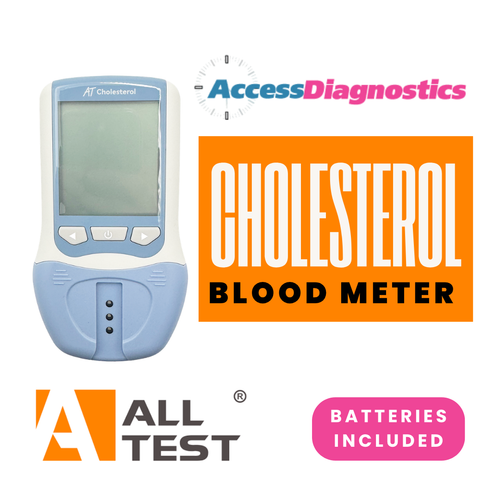
- Cholesterol: The ALLTEST Professional Cholesterol Meter (ACHR-100ST) gives a detailed lipid picture from a finger-prick sample. You can read more in our cholesterol meter guide.
- Glucose, cholesterol and uric acid: The EasyLife GCU Plus 3-in-1 meter covers all three.
- Glucose, cholesterol and haemoglobin: The EasyLife GCHb Plus 3-in-1 meter is ideal if you're also watching for anaemia.
- Long-term blood sugar: Our HbA1c diabetes and prediabetes test shows your average blood sugar over the past two to three months.
- Thyroid: An under-active thyroid can affect your heart and blood pressure. Our home TSH thyroid test is a quick screen.
- Kidney clues: URS10 urine test strips check for protein and glucose in urine, among other markers.
When to get medical help
Contact your GP or call 111 the same day if:
- your reading is 180/120 mmHg or higher and stays high when you re-check after five minutes of rest, even without symptoms
- your home readings are consistently above 135/85 mmHg
- your readings are consistently low and you feel dizzy, faint or unusually tired
- your monitor repeatedly flags an irregular heartbeat
Call 999 if a high reading comes with:
- chest pain or tightness
- a sudden, severe headache
- breathlessness
- confusion or changes to your vision
- weakness or numbness in your face, arm or leg, or slurred speech
For more guidance on fertility and pregnancy concerns, see our page on when to seek help.
Frequently asked questions
Can I get a blood pressure monitor on the NHS?
Some GP surgeries lend monitors to patients who need to check their blood pressure for a set period. In England, the Blood Pressure @home scheme also supports home monitoring. Ask your practice what's available locally.
Are cheaper blood pressure monitors accurate?
Price alone doesn't decide accuracy. A well-made, affordable upper arm monitor with a properly fitting cuff can perform very well. It's worth checking whether a device appears on the BIHS validated list, and comparing a home reading with one taken at your pharmacy or surgery.
How often should I check my blood pressure at home?
Follow your GP's advice. If you've been diagnosed and your blood pressure is stable, checking once a week or once a month is often enough. There's usually no need to check several times a day, as this can create unnecessary worry.
Which arm should I use?
The first time, take readings from both arms. If one is consistently higher, use that arm from then on and let your GP know about the difference.
Can I just buy a replacement cuff?
Yes, as long as the connector matches your monitor. A new cuff in the right size can transform the accuracy of a device you already own.
Should I tell my GP I'm monitoring at home?
Yes. If you regularly use a home monitor, let your practice know and bring your log to appointments. It helps your doctor make better decisions about your care.
Final thoughts
Buying a blood pressure monitor is one of the simplest things you can do for your long-term health. You don't need to spend a fortune. What matters most is:
- choosing an upper arm monitor
- making sure the cuff fits your arm
- taking your readings the same careful way every time
Get those three right and your home readings will give you and your GP a reliable picture.
If you'd like help choosing a monitor, cuff or any home health test, our UK team is available by phone, email and live chat on weekdays. Contact us here.
Medical Disclaimer
The information in this article is for general educational purposes only. It is not a substitute for professional medical advice, diagnosis or treatment. Blood pressure targets and treatment vary from person to person, so always follow the guidance of your own GP, practice nurse, midwife or pharmacist.
Home blood pressure monitors and home test kits are screening and monitoring tools. They do not diagnose any condition on their own. Never start, stop or change a prescribed medicine based on a home reading without speaking to a healthcare professional first.
If you have a very high reading with symptoms such as chest pain, a severe headache, breathlessness, confusion, vision changes or weakness, call 999 immediately. If you are pregnant and have any concerns about your blood pressure, contact your midwife or maternity unit straight away.